Built to Sustain: Why Building Data Fails the Occupier

We are operating in one of the most complex periods in modern history.
Geopolitical instability is increasing. Climate risks are intensifying. At the same time, technology is advancing at extraordinary speed, generating vast amounts of data across every aspect of the built environment.
Commercial real estate is saturated with data, yet a critical blind spot persists: translating that insight into the occupier experience.
The data paradox in real estate
Buildings are instrumented with sensors. Platforms track energy use, occupancy, air quality, maintenance issues, and user feedback in real time. On paper, this should enable highly efficient, optimised environments.
Yet in practice, many buildings continue to underperform. After six years specialising in sustainability across commercial real estate, one lesson has become increasingly clear: the issue is not a lack of data, but a lack of translation. Too often, building data remains technical, fragmented or disconnected from the people it is meant to serve.
The real opportunity lies in making performance data more user-centred, so that insight can move beyond reporting and become something occupiers, property teams and asset owners can understand, trust and act on. Because people are the largest cost, and often the greatest source of value, in any organisation, the ultimate measure of real estate performance should be its impact on human performance.
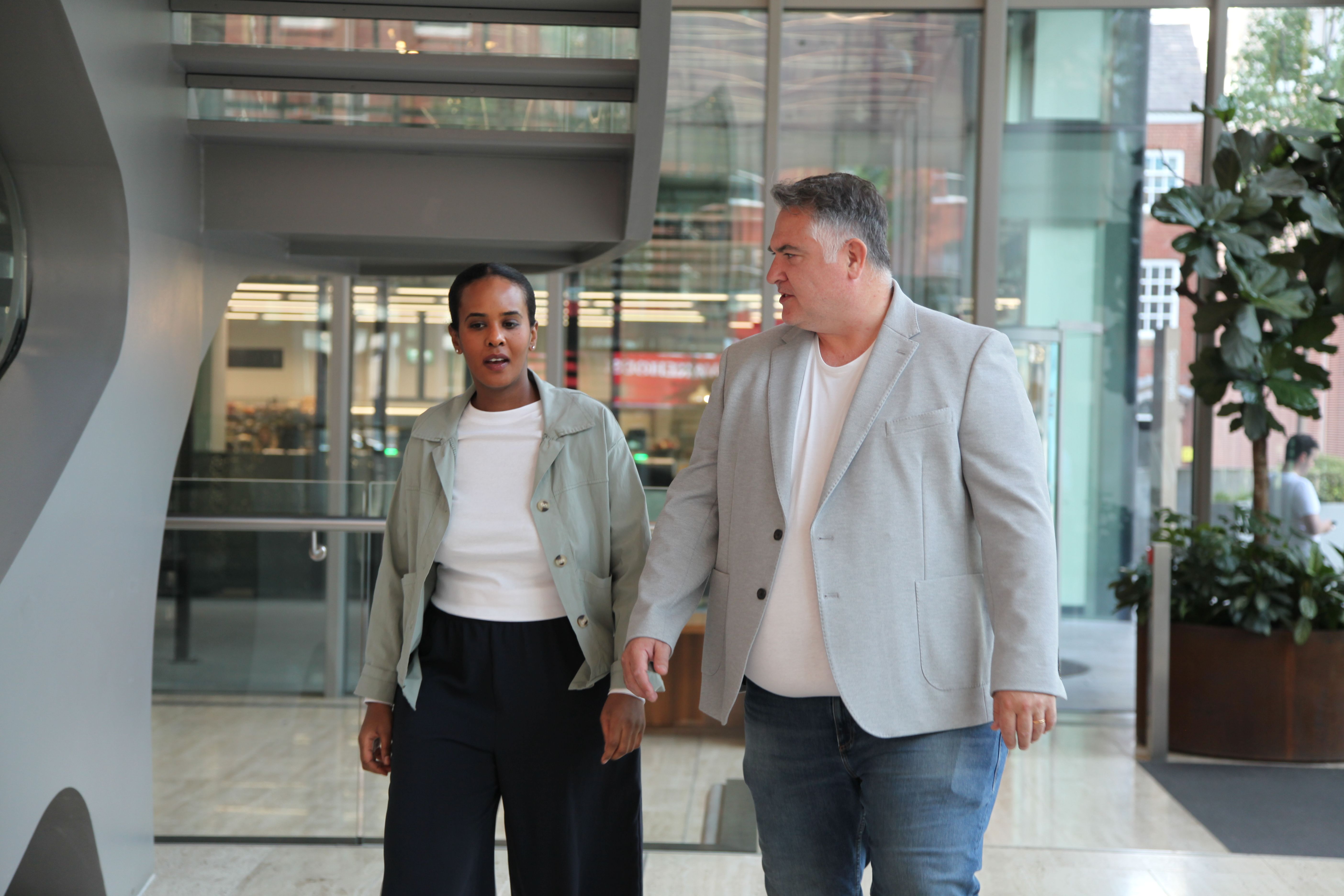
Fatima Mohammed, Head of ESG at Form Property and Lee Rhodes, Founder of Open Green Energy
Making building data user-centred
At Form, user-centricity starts with the way building data is made visible and understandable. Through our data partner platform, G.R.E.T.A, developed by Open Green Energy, we are able to bridge the gap between complex data lines supporting actionable insights.
G.R.E.T.A brings, energy, waste and operational data into one platform, providing real-time insights that support informed decision-making and proactive building performance.
Its value is reflected in feedback from occupiers at No.1 Spinningfields. Elizabeth Brunt, Senior ESG Executive at Fieldfisher, said:
"GRETA has helped us better understand the environmental impact of our Manchester office by providing accessible, data-driven insights into energy consumption and waste management. Moving forward, this will support informed decision-making, allowing us to create evidence-based action plans to reduce emissions in one of our largest offices."
Daniel McIntyre Clark, Environmental, Health & Safety Manager at Browne Jacobson, added:
"Browne Jacobson has been using GRETA for several years and it's become a genuinely useful tool for the team. It's great to see the platform evolving, and we're particularly excited about the potential to expand beyond electricity and cover other utilities too, making it an even more powerful resource for collecting the valuable data needed for our Scope 1 and 2 footprint."
Why Fragmented Teams Are Holding Real Estate Back
A platform can make information clearer, but it cannot by itself decide priorities, adjust systems, respond to occupier feedback or align competing commercial, operational and sustainability objectives. That requires people working from the same evidence base, with a shared understanding of what the building needs and what occupiers are experiencing.
This is where fragmented teams make user-centred performance harder to deliver. Our approach to customer data is fundamental to what our brand stands for.
As businesses move beyond the traditional single-HQ model, occupier needs have become more varied and nuanced. By understanding occupiers through their data, we can deliver spaces and services that evolve with the way they work.
The challenge is that commercial real estate is still largely fragmented. Asset managers, property managers, facilities teams, sustainability teams and workplace teams often operate in silos, each holding part of the picture. That separation makes it difficult to translate data into joined-up action, and even harder to create a consistent occupier experience.
Form has built a different model - one that, inspired by the principles of customer experience, deliberately brings these functions together around a single focus: occupier satisfaction. Because while most of the industry still optimises parts of the system, real performance only happens when the whole system is aligned around one goal.
Form’s model brings functions together to ensure data is translated into experience, by using systems like G.R.E.T.A to make data understandable and integrating teams to centre the user.
The reality is that most real estate operators are not structured to deliver this. Their mandate has traditionally been different, and understandably so, focused on leasing space, driving occupancy, and managing assets through clearly defined silos. The industry doesn't need more sustainability strategies, it needs to build the resource to deliver them.